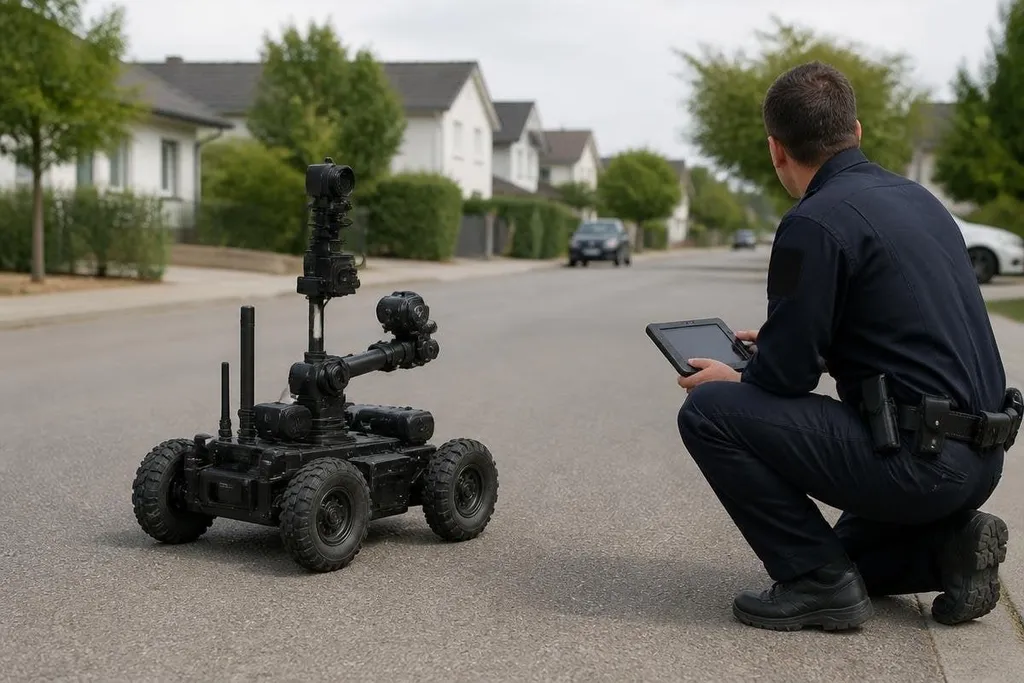
A police robot can put a camera, microphone, or other sensor near a dangerous scene while the operator stays back. The next phase will be judged less by how it moves and more by whether it works safely, clearly, and within the law.
Quick read
- Remote control keeps a person in charge when the robot enters a risky area.
- Cameras and sensors are useful only when the system sends clear, timely data.
- Police departments need proof of safety, cost, training needs, and public safeguards before buying.
The useful job comes first
A department should start with a task, not a robot shape. That task might involve checking a damaged vehicle, viewing a building entrance, or inspecting an object that could hurt a nearby officer.
The machine needs to give the operator better information than they could get from a safe position. A camera feed with a long delay can make movement hard to control, while poor audio can hide a warning from someone at the scene.
Teleoperation means a person controls the robot from another place. That link needs stable video, clear controls, and a known response time. If the operator moves a joystick and the robot reacts late, the risk moves back to the person on the ground.
The robot may also work with autonomous software. In that setup, the software can handle a narrow task, such as keeping a set distance or following a mapped route, while a human approves larger actions. The limits need to be visible to the operator.
Sensors do not make decisions alone
A camera records a scene. Software may sort objects, read movement, or point out a person, but those results can be wrong because of darkness, smoke, rain, blocked views, or crowded spaces.
That matters when a robot supports a search or an emergency response. The operator needs the raw view, the software result, and a clear sign when the system is unsure. A label without its limits can push a person toward a bad call.
Data handling also belongs in the design review.
Departments need to know what the robot records, where the files go, how long they stay there, and who can open them. Those answers affect body-camera policy, public records rules, and access by people outside the operation.
A robot’s data policy belongs beside its purchase quote. A department comparing police robots can use Robot24 to check the stated task against trial evidence and data controls before pricing software, training, and service.
The buying case has more than a sticker price
The purchase price is one line in the budget. A department may also need spare batteries, transport cases, radios, software support, training time, repairs, and staff to operate the system.
A small fleet can still create a large training burden if each model uses different controls or software. Procurement teams should ask how many people need training, how long that training lasts, and what happens when the network or battery fails.
Safety needs a test plan before a contract is signed. The department should check emergency stops, loss of signal, moving parts, battery damage, and operation near people. A robot that works in an empty test area may behave differently in a narrow hallway or a busy street.
Public trust depends on the same level of detail. Residents need a clear reason for using the machine, rules for recording, and a way to ask what happened during an operation. Police leaders should publish those rules before the first live deployment.
What remains unproven
The open question is not whether a robot can move through a scene. It is whether the machine improves safety enough to justify its cost, training, data collection, and maintenance over time.
Departments should ask vendors for uncut task videos, failure records, service terms, and results from places that resemble their own work. A polished demonstration can show movement. It cannot show how often the system stops, loses contact, needs repair, or confuses an object.
I'd wait for a trial with clear measures before approving a large order. The trial should record response time, operator errors, battery use, repair calls, and every case where a human had to take over.
A practical buying checklist
Use these checks before a department signs a purchase order:
- Defined task and success measure
- Operator control during signal loss
- Camera, audio, and sensor limits recorded
- Battery, repair, and spare-part costs
- Data storage, access, and deletion rules
- Public notice and trial review date
A police robot earns wider use when it can show safe work, clear limits, and a cost the department can defend. Until a trial supplies those records, the sensible next step is a small test with a public review date, not a large fleet order.